

Dr. Candice Odgers, professor of Psychology and Informatics at UC Irvine, spoke to the Sage Hill community about the mental health impact of digital technology and social media during a Sage Center Speaker Series on Sept. 30.
Odgers, whose research focuses on the intersection of youth development and digital media, addressed common misconceptions about screen time and teen mental health. She has authored more than 100 scientific publications, and her work has been featured in outlets including The Economist, The London Times, Scientific American and The Washington Post.
With over 30 years in mental health research, Odgers said the rise of mobile phone use among adolescents in 2008 inspired her to focus on digital technology’s impact on the adolescent brain. Since then, she has conducted large-scale surveys and meta-analyses examining the relationship between technology use and mental health symptoms in youth.
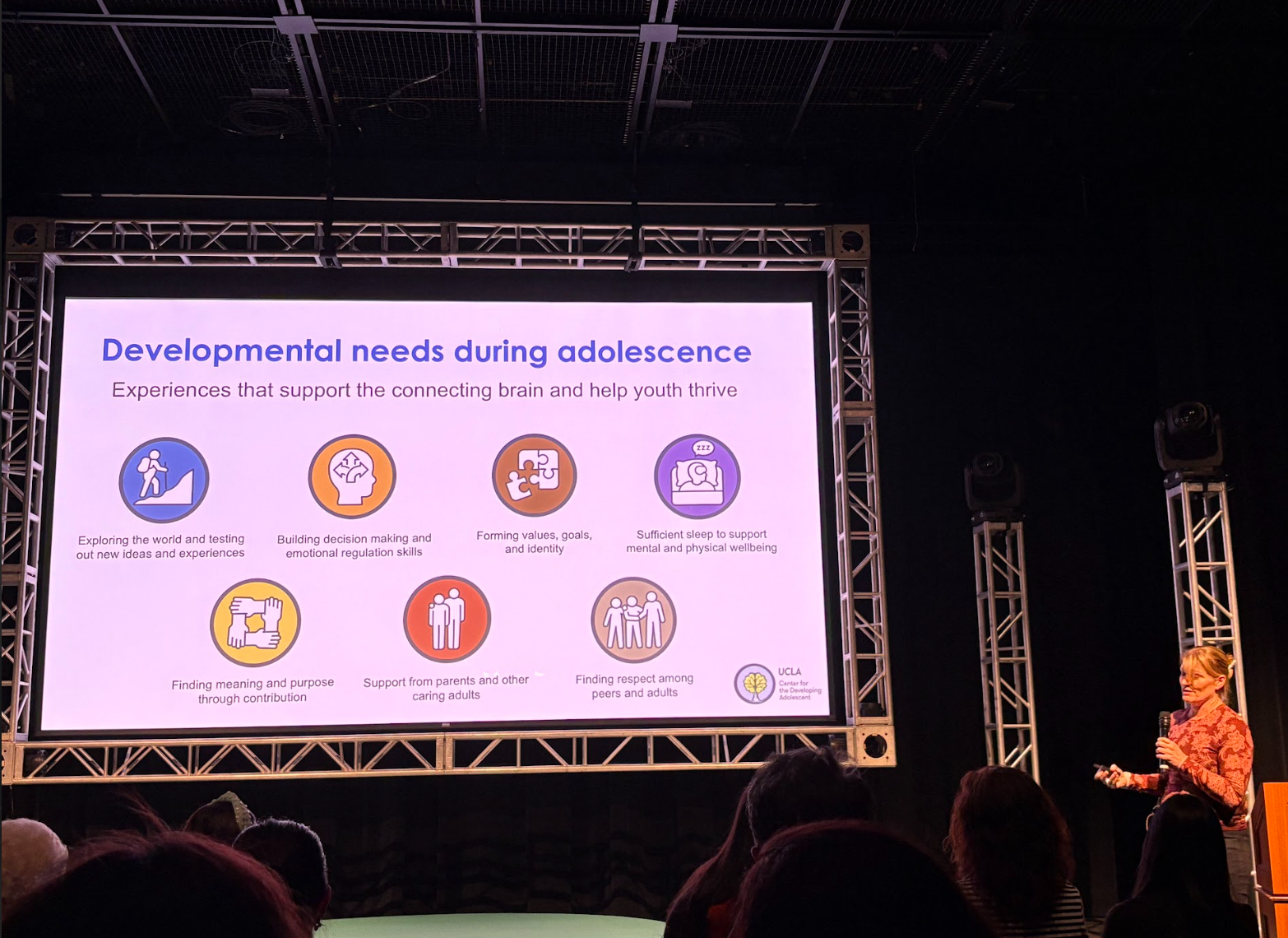
Contrary to popular belief, Odgers said social media use has only a small link to negative mental health outcomes in teens. She argued that fears about screen time are often exaggerated and that its effects depend heavily on individual circumstances.
“You look across all those studies, and this is the surprising part: usually, the effect of screen time on indicators that we care about is very close to zero,” Odgers said.
The slight positive or negative effects of social media were tiny and explained less than one percent of the variation observed in research, she said.
Highlighting a key nuance, Odgers emphasized that although social media and screen time aren’t the main drivers of the youth mental health crisis, it remains necessary to regulate the potentially exploitative practices of tech companies.
We need to regulate tech companies. And it can also be true that social media and time online, the way that our young people are using it, is not the main driver of their mental health crisis today,” Odgers said.
However, she added that the future of tech regulation remains nebulous. Without consensus on the implementation and actors involved in reform, legislation to address harmful practices is in a stalemate.
Still, Odgers expressed optimism that continued research and dialogue can pave the way for eventual policies.
“I think we’re in a place where it makes sense to take a safety first approach, so lots of education. And we’re going to have to talk to the young people in our homes,” Odgers said.