
It’s almost predictable. Every four years, curling transforms into a global sensation. Across television screens, sports media and tweets, curling dominates conversations and transfixes audiences globally. Overnight, a sport ignored for years becomes the center of attention.
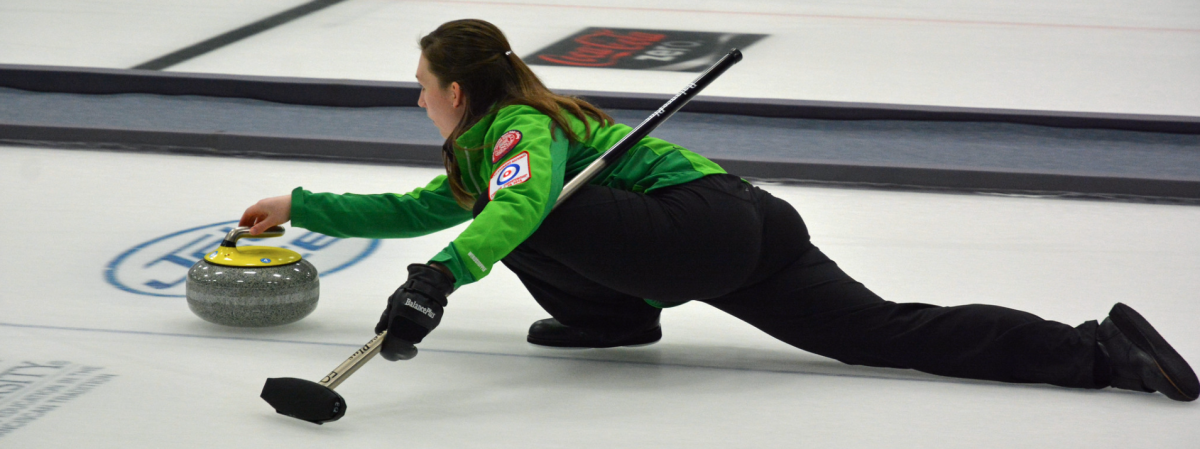
The combination of high-risk, intense strategy mirrored with long, quiet stretches of stone dragging on ice creates an element of spectacle that captivates viewers at first glance. The pageantry of curling is both oddly intense and satisfying.
First featured in the Olympic program in 1924, curling fittingly began as a demonstration sport, an event held to increase engagement and introduce spectators to local and emerging sports. Sixty years and three Olympics appearances later, the 1998 Nagano Winter Games included curling as an official sport. Despite its seemingly long history, curling continues to hold the same mystifying nature: various shot types, strategic sweeping techniques and different ice qualities sport. Despite its seemingly long history, curling continues to hold the same mystifying nature: various shot types, strategic sweeping techniques and different ice qualities.
So why do we all become curling experts every four years? Perhaps what makes curling so popular is how straightforward and imitable it appears.
Does your pulse quicken, your breath abate and do you momentarily feel as if you are the one sliding down the ice during a curling shot? You may think the reason is community: when you feel part of a fandom — the 10 years you have spent devoted to a certain team’s success or the heartwarming, tragic backstory of an athlete — why would you not react? But the true answer: mirror neurons.
Mirror neurons in our brains fire off in rapid succession when we perform an action or observe the same action done by another. During any sporting event, our nervous systems internally simulate an athlete’s performance on our own motor representations. But especially during the Olympics with a sport as seemingly simple as curling, your close observations simulate the performance—your body experiences an invisible workout. The sport appears easy to imitate because you are actually mimicking it.
There is also a social element rooted in national pride in curling, one that feels especially significant in a country as politically polarized as the United States.
Mark Twain once wrote, “Patriotism is supporting your country all the time, and your government when it deserves it.”
The Olympics have long established themselves as political games: the famous Black Power salute of Tommie Smith and John Carlos in protest of racial discrimination, the ban of Russia in the last two Olympic games following its invasion of Ukraine and, in the most recent games, U.S. athletes speaking out against President Donald Trump and his immigration policies.
“I chose to utilize one of the amazing things about the United States of America (freedom of speech) to convey how I feel,” said American figure skater Amber Glenn, defending her comments in support of the LGBTQ+ community.
Her statement highlights how, even in moments of division, athletes will redefine what it means to represent their country. The sentiments reflect a deeper truth about patriotism. Watching a curling team during the Olympics is no longer just a single electrifying movement, it becomes symbolic, a small but meaningful representation of how we balance our collective unity and individual identity. Pretending to understand curling is not simply about the sport itself anymore; for a moment, it doesn’t just unite our self-confidence or imitation skills, it unites a nation.