
The American public should be alarmed at how easily they have learned to look away.
In the early hours of Jan. 3, U.S. special forces landed in Caracas, stormed the presidential palace, and captured Venezuelan President Nicolás Maduro and his wife, Cilia Flores. Within 48 hours, they were in New York federal court, facing U.S. criminal charges.
Just four days later, ICE agents in Minneapolis shot Renee Good to death. She was unarmed. Less than three weeks later, nurse Alex Pretti was also fatally shot by federal agents at an anti-ICE protest. President Donald Trump decried that Good belonged to a “leftwing network” of paid agitators, while Pretti was accused of “domestic terrorism” by the Trump administration. But these Americans were no terrorists. Good was a mother of three, and Pretti cared for veterans at the Minneapolis VA Medical Center.
The inner turmoil of our country begs urgent questions: How can we pretend to uphold democratic norms abroad while orphaning children at home? Why do we send soldiers to war as we kill the nurses that rehabilitate them? And if these Americans were truly “terrorists,” doesn’t Trump’s “America First” rhetoric demand attention to domestic crises before foreign adventurism? The facade of democracy is fading, and this administration knows it.
Venezuela is a smokescreen for domestic injustice, and this is not America’s first encounter with such diversionary politics. As U.S. involvement in Vietnam escalated in the 1960s, civil rights leaders warned that the nation was prioritizing war over justice at home. Rev. Martin Luther King, Jr. condemned the Vietnam War as “a blasphemy against all that America stands for,” arguing that military escalation diverted money and attention from anti-poverty programs and civil rights protections.
The domestic consequences of foreign intervention were hardly hypothetical. On May 4, 1970, Ohio National Guard troops opened fire on unarmed Kent State students protesting the expansion of the Vietnam War into Cambodia, killing four and wounding nine. History reminds us that when public attention is consumed by foreign adventures, crises at home are allowed to fester unchecked.
It is not hard to see why such distractions persist. In an era of constant feeds and fleeting headlines, foreign wars become the ultimate spectacle, drawing focus away from the systemic injustices under our own roof—the deaths of Good, Pretti, and the broader pattern of violence that defines the Trump administration. While the nation’s gaze is turned abroad, the fractures at home grow ever more perilous.
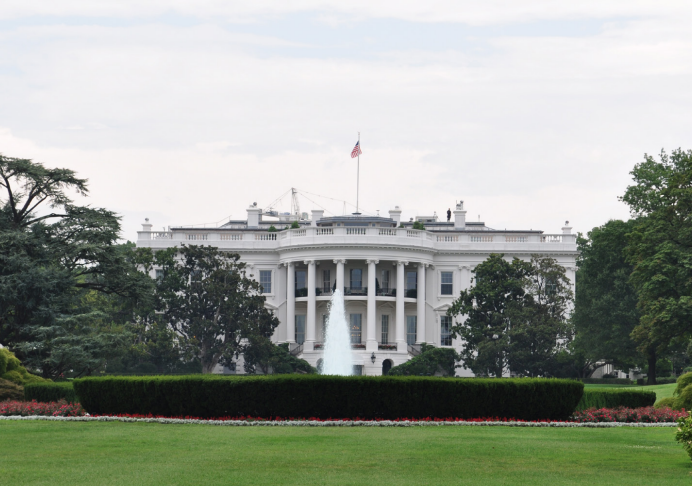
American foreign involvement includes a laundry list that ranges from full-scale wars in Vietnam and Iraq to economic sanctions spanning from Cuba to Iran. But Trump’s brazen statements after Maduro’s kidnapping mark an alarming departure from previous norms. Previous administrations, however controversially, at least sought public or Congressional support as a check before major foreign actions. The Trump administration, by contrast, treats unilateral force as routine and justifies its actions only after the fact.
In a Jan. 3 press conference, Trump declared that the U.S. would “run the country until such time as we can do a safe, proper and judicious transition,” signaling plans to govern Venezuela directly—without constitutional authority or international consent. He framed the intervention as an anti-drug operation, despite evidence showing Venezuela plays only a minor role in supplying Americans’ drug habits, and claimed the mission “won’t cost us anything” because U.S. oil companies would rebuild infrastructure and profit. Independent analysis provides no support for these claims.
Legal scholars emphasize that unilateral military action on sovereign soil without U.N. authorization violates international norms. Under the U.S. Constitution, Congress alone has the power to declare war. Yet Trump acted without consultation, bypassing the legislative branch entirely. In doing so, he presents the United States as a hostile power in the Western Hemisphere, undermining both our domestic legal framework and global credibility.
The consequences of such actions are neither abstract nor hypothetical. Last September, tensions between the Trump and Maduro administrations led to the deaths of 100 Venezuelans, in an operation the president justified as an effort to stop drug smuggling. Trump’s justification ignores broader evidence: Venezuela accounts for a small fraction of the cocaine entering the U.S., and most of its exports flow to Europe. Meanwhile, Trump has framed Venezuela’s oil reserves as a prize to offset the costs of military adventurism, effectively turning a sovereign nation into a source of American profit.
We should not mistake legality for legitimacy. The seizure of Maduro, the targeting of Venezuelan infrastructure and the threats of prolonged occupation reflect a dangerous precedent: a willingness to act on geopolitical ambition without accountability. Yet the American public has largely looked away. Our inattention and lack of public scrutiny enable extraordinary power to operate unchecked—a complacency that is, in effect, weaponized.
As the world watches, the question remains: will we confront these violations, uphold the law, and demand transparency from our leaders? Or will we continue to accept unilateral aggression as routine, turning away from the moral and legal consequences? The United States cannot separate itself from the consequences of its actions abroad, and silence is complicity.